
Introduction to Smart Energy Solutions
In a world where climate change is no longer a distant threat but a daily reality, the need for smart energy solutions has never been greater. Energy demand is increasing at a rapid pace, and traditional fossil-fuel-based systems are proving unsustainable. The transition towards renewable, efficient, and intelligent energy systems is no longer optional—it’s essential for both economic and environmental survival.
So, what exactly are smart energy solutions? Simply put, they combine renewable energy sources, advanced technologies, and intelligent systems to create a more efficient and sustainable way of producing, distributing, and consuming power. Imagine your home automatically adjusting its energy usage during peak hours, or entire cities reducing their carbon footprint with smart grids and energy-efficient infrastructure. That’s the promise of smart energy.
The beauty of smart energy solutions is that they don’t just focus on reducing carbon emissions; they also provide economic benefits, lower energy bills, and make power systems more reliable. With the help of IoT (Internet of Things), AI, and big data analytics, smart energy solutions can transform the way we interact with energy—whether at home, at work, or across entire cities.
This article explores every aspect of smart energy—from its components and benefits to its challenges and future trends—giving you a complete overview of how it’s shaping our sustainable future.
The Evolution of Energy Systems
Energy systems have undergone massive transformations over the past century. For most of human history, coal, oil, and gas were the backbone of economic growth. These fossil fuels powered factories, transportation, and homes, fueling industrial revolutions worldwide. However, this progress came at a cost: rising greenhouse gas emissions, air pollution, and global warming.
The early 21st century marked a turning point. With growing awareness of climate change and technological innovations, countries began shifting toward renewable energy sources like solar, wind, and hydro. But renewable energy alone was not enough. Renewable power is intermittent—sunlight isn’t always available, and wind doesn’t blow consistently. This challenge sparked the rise of smart technologies that can balance, store, and optimize energy usage in real time.
Smart energy systems combine renewables, storage, and data-driven management to create resilience and flexibility. Unlike old centralized grids, modern smart grids allow for two-way communication between providers and consumers. This means households and businesses can also feed energy back into the system, creating a decentralized energy ecosystem.
We’re now entering a new era where energy isn’t just about consumption—it’s about interaction, optimization, and sustainability. The journey from fossil fuels to smart solutions is the story of humanity’s shift from exploitation to responsible stewardship of resources.
Core Components of Smart Energy Solutions
To understand smart energy solutions, we need to break them down into their core building blocks. These components work together to create a cleaner, more efficient, and reliable energy system.
1. Smart Grids
Smart grids are the backbone of smart energy. Unlike traditional grids that simply deliver power in one direction, smart grids use sensors, AI, and real-time monitoring to optimize electricity flow. They can detect outages, balance supply and demand, and even integrate renewable energy seamlessly.
2. Renewable Energy Integration
Solar panels, wind turbines, and hydropower systems form the clean energy foundation. With smart technology, excess renewable power can be stored or redirected to areas with higher demand.
3. Energy Storage Systems
Since renewables are intermittent, energy storage—like lithium-ion batteries and emerging hydrogen storage technologies—ensures power is available even when the sun isn’t shining or the wind isn’t blowing.
4. Smart Meters & IoT Devices
Smart meters give consumers real-time insights into their energy usage. IoT devices, such as smart thermostats and appliances, help reduce unnecessary consumption while maintaining comfort.
Together, these technologies create a synergistic ecosystem that adapts dynamically to changing energy needs, reducing waste and improving sustainability.
Benefits of Smart Energy Solutions
Smart energy solutions are not just about saving the planet—they bring tangible economic and lifestyle benefits as well.
1. Environmental Impact
By reducing dependency on fossil fuels and promoting renewables, smart energy directly cuts carbon emissions. Cleaner air, reduced global warming, and conservation of natural resources are major benefits.
2. Cost Savings
Smart energy allows households and businesses to save money. Real-time data from smart meters helps users identify high-consumption patterns, while energy-efficient appliances lower utility bills.
3. Efficiency & Reliability
Smart grids reduce power outages, balance demand, and ensure stable supply. For businesses, this translates into fewer disruptions and higher productivity.
4. Empowering Consumers
With smart solutions, consumers are no longer passive users. They can generate their own power, store it, and even sell it back to the grid, creating new opportunities for income.
Smart Energy in Homes
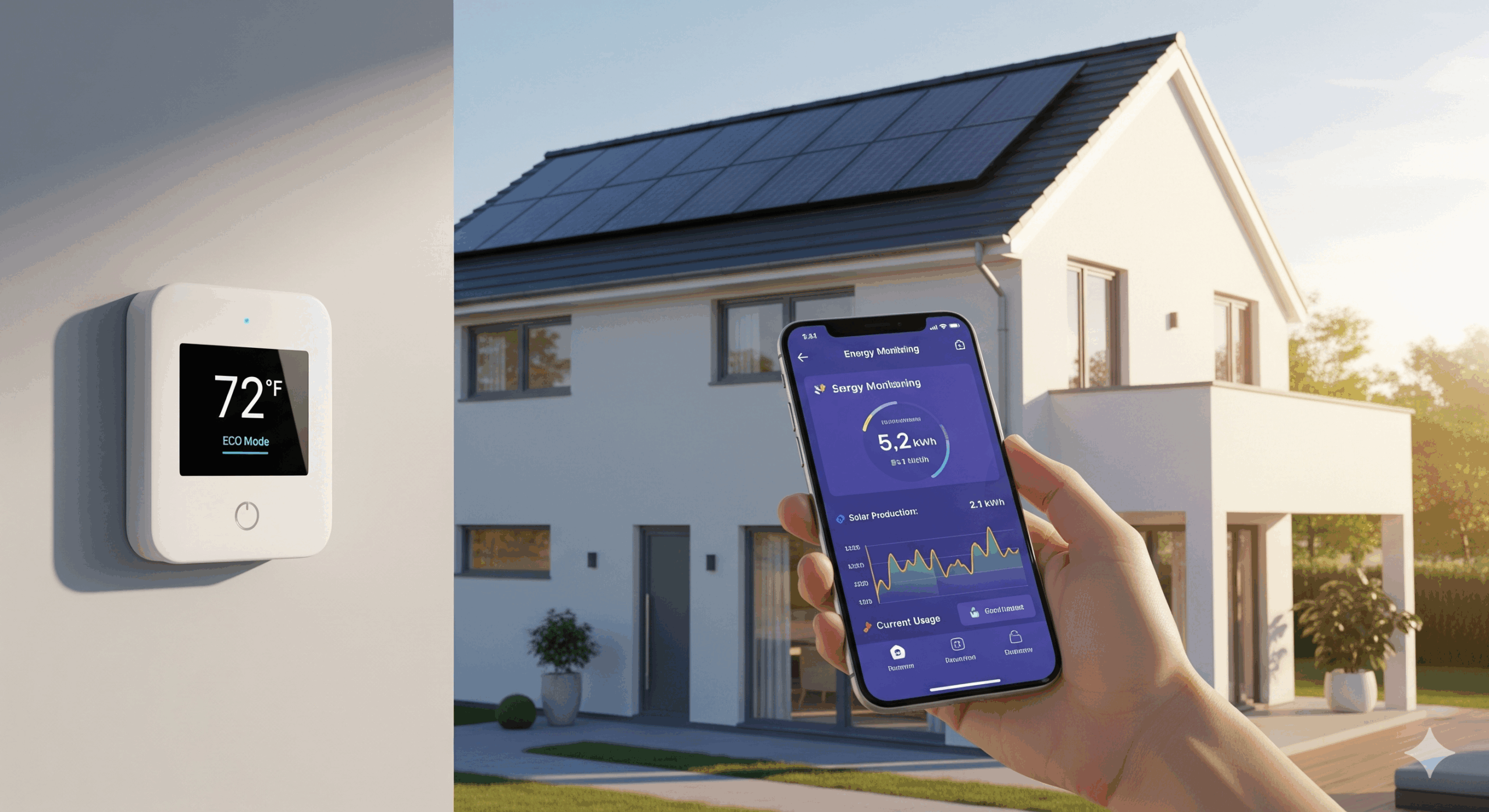
The home is often the starting point for adopting smart energy solutions. With the rise of smart home technology, households can now play a significant role in shaping energy efficiency.
1. Smart Thermostats & Appliances
Devices like Nest or EcoBee automatically adjust heating and cooling, saving energy without compromising comfort.
2. Home Solar Systems:
Rooftop solar panels combined with home batteries allow families to generate and store their own clean power.
3. Energy Monitoring Apps
Mobile apps provide real-time feedback on consumption, helping homeowners make smarter decisions.
For example, imagine leaving home for work, and your smart thermostat instantly reduces heating or cooling to save energy. When you return, it adjusts back for comfort. This automation ensures efficiency without requiring constant human effort.
By integrating solar panels, battery storage, and smart appliances, homes can even become net-zero energy consumers, meaning they produce as much energy as they use. This not only cuts costs but also increases energy independence.
The movement toward smart homes is more than a trend—it’s a revolution in how families interact with energy. Every home that adopts these solutions brings us closer to a future where clean energy isn’t just an option—it’s the norm.


